Review: Dreams of Significant Girls by Christina Garcia

Dreams of Significant Girls, by Christina Garcia
Simon & Schuster, 2011. (currently available)

Genre: Historical Fiction, Realism
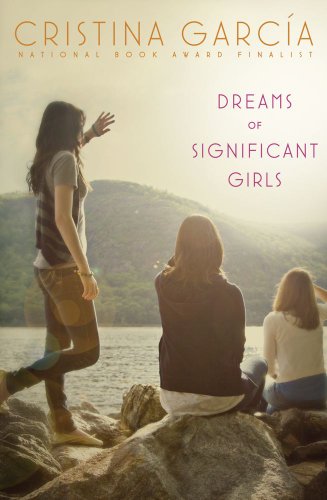
Face Value: Well it’s certainly pretty to look at, and I wasn’t embarrassed to read it on a train. And I do appreciate that the three girls on the cover are pictured with their full bodies intact, and I like that their backs are turned so we get silhouettes rather than portraits. But I would argue that these three girls have very little to do with the three girls we read about in the story. For one, they all read as white, even though Vivien is Cuban and Shirin is Iranian. And they’re all very thin, when Vivien is self-described as zaftig throughout the book. Plus, as Julie at That Klickitat pointed out, the clothing they’re wearing looks a lot more 2011 than 1971.

Does it Break the Slate? Absolutely. Though it’s not an explicitly feminist narrative, the authenticity of the voices of these three girls, the complexity of the friendship that grows between them and the way they relate to their immediate and larger surroundings are undeniably slatebreaking in nature. Any book that thoughtfully addresses the complexities of female friendships is usually worth a read for me. We think a lot on this site about the way young women are constructed on the page, and the way that relationships between women are represented. The overwhelming dynamism, believability and realism of the way these three women and their connection to one another is written makes this story one to watch for.

Who would we give it to? Good question. In my reviews so far this is the hardest book to classify in this category. But I think it will appeal to fans of contemporary & historical realism, as long as they aren’t intent on having great romance in the story.

Review:  It’s 1971, and Vivien (Cuban Jewish New Yorker) Ingrid (first generation German Canadian) and Shirin (Iranian from a powerful family) are placed together as roommates at a summer boarding school in Switzerland. None of them are that happy about it, which always seems to be the case in these stories. Because everything about that sounds amazing to me, I always find that particular plotline to be implausible in boarding school narratives like these, but, since that has no real relevance to this review, I’ll let it go. Anyway, the girls are all very different – Vivien is a bookish, cheerful aspiring chef, Shirin is a brilliant, socially reserved and somewhat spoiled princess and Ingrid is an artistic, sexually adventurous rebel. They struggle to find common ground, but over the course of three summers and some drastic life changes in the meantime they develop a close, significant friendship.

You guys, this is not your typical boarding school story. Yeah, it has a lot of the tropes you love & expect (exciting European location, horseback riding etc., new friends from different cultural backgrounds coming together and finding meaningful friendships) but it’s very maturely written, and there’s a lot of room for tension and distress and complexity between the girls, even as they become deeply important to each other. The summers do not always end on a point of resolution and the moments when the girls come back together and reconnect are remarkably unsentimental. Sisterhood of the Traveling Pants this is not.
Continue reading

Posted in Reviews, Young Adult | Tagged , , , | 2 Comments

Review: Babymouse by Jennifer L. Holm & Matthew Holm

Babymouse: Queen of the World! by Jennifer L. Holm & Matthew Holm. Random House, 2005. Currently available.

Genre: Middle Grade Graphic Novel

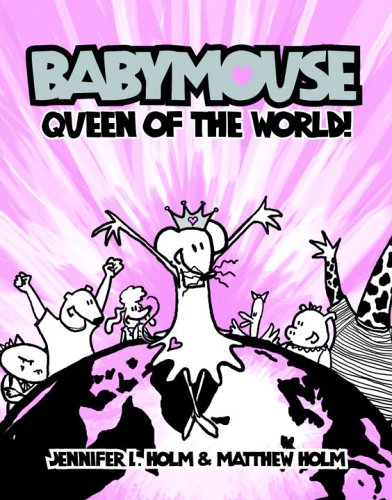
Face Value: This cover is vastly different from the typical primary colored, muscle man covers that you usually find in the graphic novel section. Babymouse is pink and proud. (She even has jazz hands.) With all that pink plus a crown and a few well-placed hearts, this cover screams, “Come and get me, girl readers!” Although I’m not really a girly-girl, I find this cover very appealing, especially since Babymouse is front and center.

Does it break the slate? Not really. Although Babymouse is a funny and charming girl character, she doesn’t break the slate in this first book of the series. She challenges the social hierarchy of her school, but she doesn’t shatter gender stereotypes. Yet. In her fantasies, Babymouse imagines that she does some slatebreaking things, but she doesn’t enact these fantasies in her real life. I plan to continue reading the Babymouse series because I think that she has major slatebreaking potential.

Who would we give it to? I would eagerly give this book to former Fancy Nancy/Pinkalicious fans who are growing up and looking for new series to love. Babymouse is stylish and sassy, but in a more subversive way than Nancy or Pinkalicious. It would also be an excellent option for reluctant girl readers looking for books that are easy to read but still “cool.”

Review: Babymouse is a mouse with an attitude. She’s kind of grumpy because she doesn’t like her tedious daily routine, especially because it involves going to school, which Babymouse thinks is sooooo boring. She would much rather read. Her life would be so much better if she were part of the popular crowd and hung out with queen bee Felicia Furrypants.

Babymouse’s savvy attitude is reflected in the visual presentation of the story. The pink and black aesthetic, along with the energetically rendered animal characters, immediately drew me in. The visual experience begins at the front cover, which folds out to reveal Babymouse in the shower, crying, “Hey! I’m not ready yet!” This interplay between Babymouse and the unseen narrator of the book continues until the back cover and adds a meta-layer of hilarity to the reading experience. Continue reading

Posted in Graphic Novels, Reviews | Tagged , , , , , | 1 Comment

The Slatebreakers take on AATE!

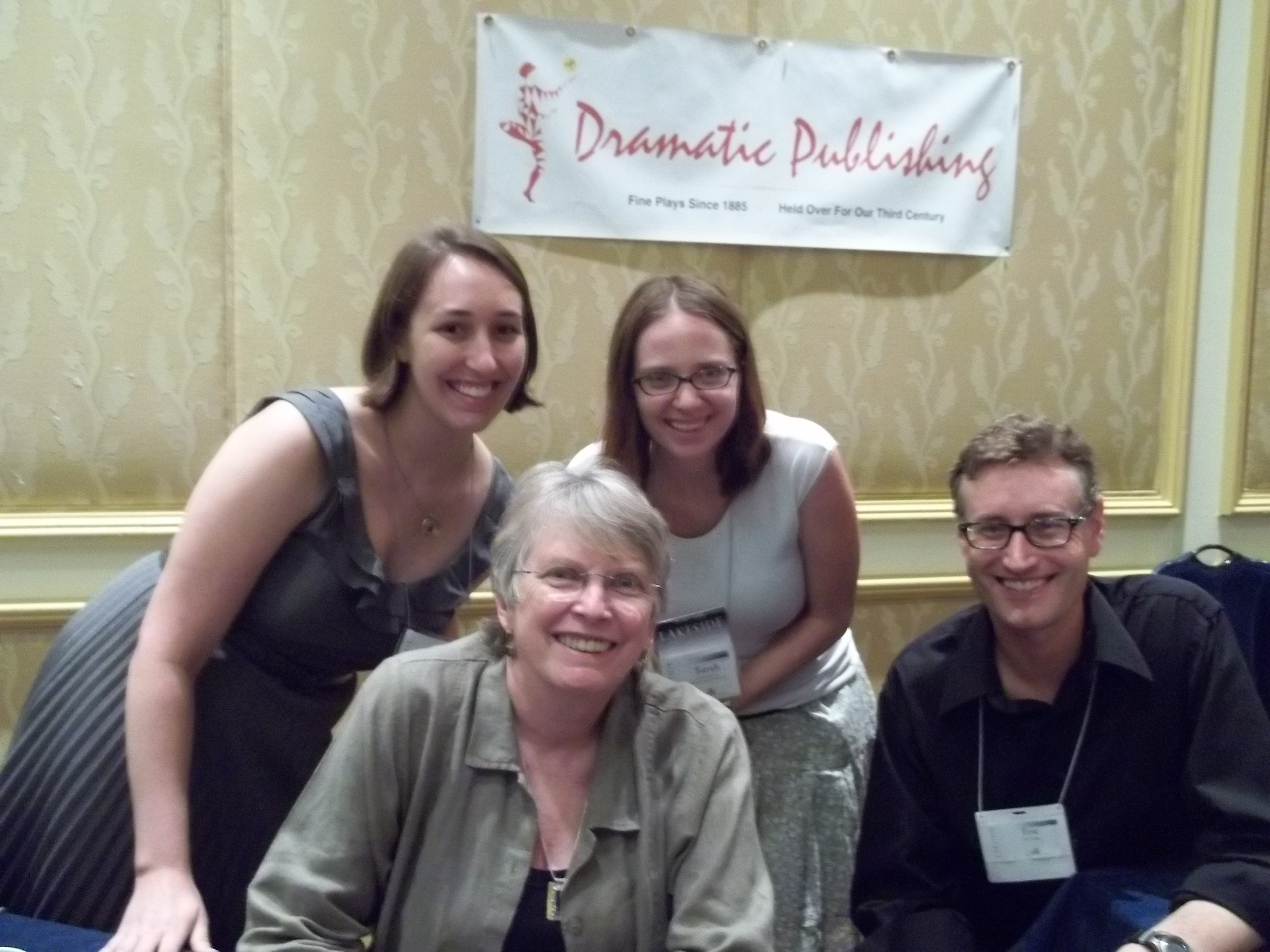
As we’ve alluded to throughout this blog, both Brianna and I are drama educators, alongside our obsession with YA literature. Last week the two of us traveled to Chicago to attend the national conference put on by the American Alliance for Theatre & Education (AATE). Though not everything we did was kidlit-connected, we did have a couple of standout Slatebreaker moments, starting with this one:

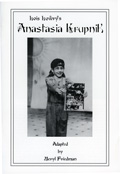
Yes! That is us with Lois Lowry, author of such amazing books as The Giver and Number the Stars and (Slatebreaker All Star) Anastasia Krupnik! Also pictured is Eric Coble, who adapted the Giver & won AATE’s Distinguished Play Award for the adaptation. We talked about how not only is Anastasia an amazing & hilarious hero, but her parents are pretty incredible characters in their own right. It’s a shame they aren’t being published anymore, but I did manage to get a signed copy of this TYA adaptation of the first book


It’s a pretty faithful adaptation, actually. Most of the dialogue is lifted directly from the book, which seemed to work since it’s a dialogue heavy play. I’d love to see it onstage.

Continue reading

Posted in Miscellaneous | Tagged , , , | 3 Comments

Use Your Gray Matter: Covering Cover Art

This is a topic that has certainly been, ahem, covered, in a lot of places already. But since we’ve been referencing our feelings about book covers, at least briefly in all of our reviews, I wanted to start the conversation formally on the blog.

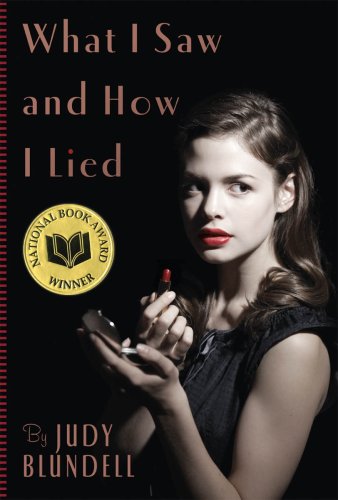
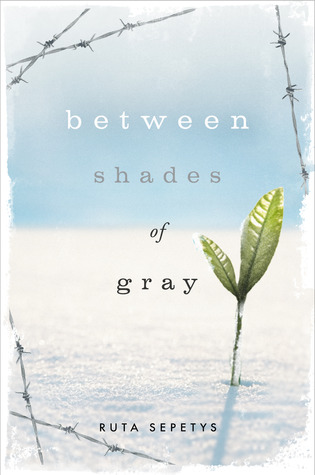
I’ll start with a confession: I am constantly judging books solely by their cover art and aesthetic presentation. Aphorisms aside, I”m pretty sure that most of us do. Let’s be honest, we’d all rather be seen on public transportation reading one of these


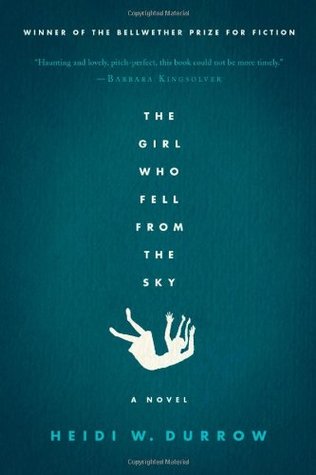
than one of these


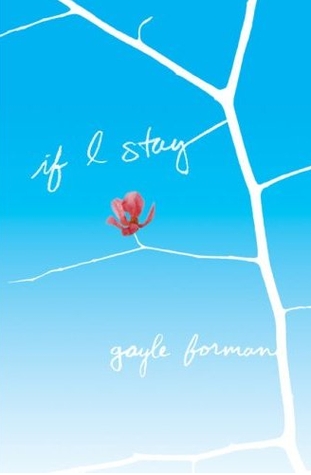
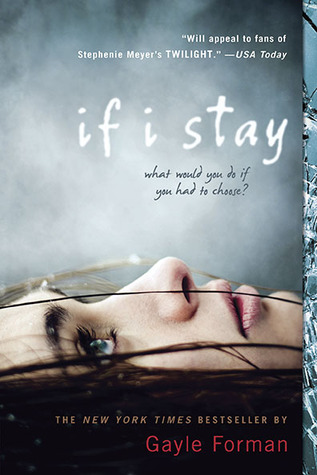
And all of these books are great! On the inside you have terrific stories that contain complex characters and multi-faceted representations of girlhood. But the marketing package suggests that those in the latter category are something very different than those in the former. For that matter, I’d much rather take this book into a public place

than this one

And they are the SAME BOOK!* But when I look at them, from a purely aesthetic standpoint, the first version suggests the sad, lovely simplicity of the story, without layering too much on top of it, and the second tells me that We Are Dealing With A Tragic Girl Here Everybody! The first cover evokes stark emotions and the  essence of the book’s central grief, the second tells me that the girl in this story is pretty and sad and maybe dead and could probably get her story retold on Lifetime or maybe even the WB.

Now as I understand it, writers rarely get much say in the way their book looks once a final draft gets sent to publishers. Their opinions regarding the cover and back matter are often not reflected in the artwork we see on bookstore shelves. So please trust me when I tell you, that, whatever criticisms I’m putting forth throughout the rest of this post are not related to my esteem for those writers. In fact, I like every one of the books I talk about in this post. A lot. Some of my favorite books, and some of the most interesting, multi-dimensional young women in contemporary literature, are cursed with terrible covers, and these covers do NOT detract from my enjoyment of the writing.

What I’m interested in, really, is how these books, their characters and their intended audiences are represented through their packaging and presentation on the shelf. Of course, while the issue of awful covers is by no means contained exclusively to YA books, I find that young adult books and especially young adult books for girls most frequently fall victim to the terrible cover phenomenon. And so, throughout the rest of this post I will explore some of the biggest traps that cover art for young female readers seem to fall into, breaking down why I think these traps are bad, both for characters and for readers.

Continue reading

Posted in Use Your Gray Matter | Tagged , , , , , | 9 Comments

Review: Marty McGuire by Kate Messner

Marty McGuire by Kate Messner. Scholastic Press, 2011. Currently available.

Genre: Early chapter book/realistic fiction

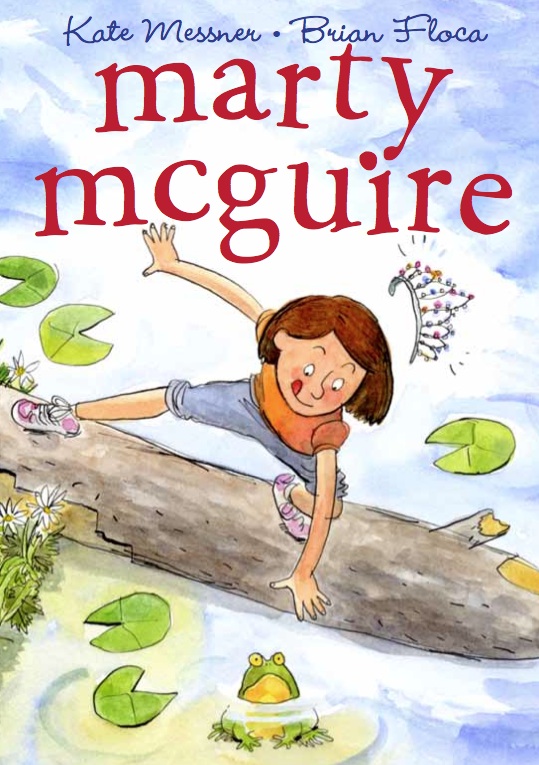
Face Value: At first glance, the illustrated cover of Marty McGuire blends in to the crowd of other Middle Grade chapter books. She’s a contemporary looking girl in a neutral, could-be-anywhere landscape. Not really attention-getting. In fact, if I had seen this book in a bookstore or on the library shelf without having heard about it ahead of time, I probably would have passed it by. Upon closer examination, however, Marty’s personality really shines in the cover illustration. She is perched precariously on a log and reaching for a (very distressed looking) frog. Her facial expression is hilarious – the tongue sticking out, the eyebrows shooting up toward the hairline. And the tiara. Oh, that tiara. It’s tumbling straight into the pond, and Marty doesn’t even care. Overall, I think that the cover fits the story very well and honestly broadcasts the nature of the main character, but it’s not going to be drawing much attention on its own.

Does it break the slate? Folks, the slate is gone. Marty McGuire shattered it so hard that the only remaining evidence of the slate is dust. In Marty, we have a female character who is decidedly not pink and frilly yet still gets to play the role of the princess (literally). Marty doesn’t like the same stuff as the other girls in her class and is well aware of her difference from the female majority. What I love most about this book is that Messner doesn’t isolate Marty as a character. Marty knows that there are other girls in her class, like Rasheena, who are uninterested in princess play. And Marty also has friends who like both tramping in the mud and playing dress-up. There are no one-note characters to be found. Everyone, even the adults, is complex and believable.

Who would we give it to? Every third grader everywhere, boy or girl. And their teachers and parents.

Review:  I have reservations about using the term tomboy, because it means different things to different people. By its nature, the term also relegates certain behaviors to the realm of “boy” and excludes them from the possible range of girl behaviors. Nevertheless, I think that’s the word that most readers would use to describe Marty. She’s dismayed when her best friend Annie, who used to love animals and playing outdoors, shows a newfound interest in princesses and girly things. So far, third grade is not going well for Marty McGuire. Continue reading

Posted in Middle Grade, Reviews | Tagged , , , , , | 1 Comment

Review: Inside Out & Back Again by Thanhha Lai

Inside Out and Back Again by Thanhha Lai
Harper Collins, 2011 (currently available)

Genre: Historical Fiction, Novel in Verse

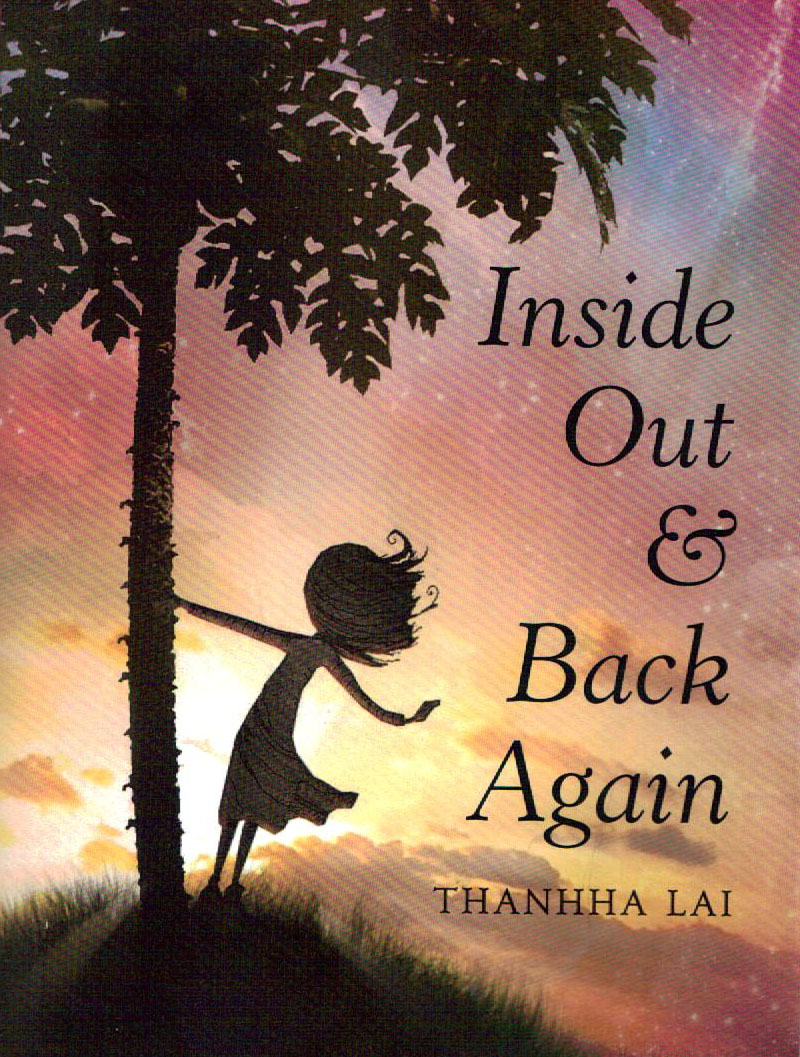
Face Value: This cover is just lovely. I love the colors and I think the silhouettes of Há and her beloved papaya tree are both perfect for the story and beautiful artwork in and of themselves.

The inside cover is compelling too. The overarching phrase, “No one would believe me but at times I would choose wartime in Saigon over peacetime in Alabama.” draws us into the story before the book even starts. This is definitely something I would have picked up off the shelf even if it hadn’t been recommended to me.

Does it Break the Slate? Absolutely yes. Há is smart and tough and honest and angry. She doesn’t let anyone push her around, whether it’s her brothers, her classmates or her teacher. This girl is up against some astonishingly tough challenges, and she (with some help from her family, neighbors and new friends) proves herself better than to be defeated by even the worst of them. What really makes this book stand out for me though, is not just the strength of our main character, but her ferocity and anger. Há is no tragic victim, waiting for someone to take pity on her. She is angry about leaving her home, angry about feeling stupid when she used to be one of the smartest kids in her class, angry about being treated cruelly by her classmates, angry that her father isn’t with them. She takes her anger out on, not just the people who treat her badly, but the people she loves. So many girls in books, especially “Girls in a Crisis Situation” are written as these virtuous victims to only be pitied, that seeing Há respond with fierce, unrepentant anger struck me immediately. Certainly her situation inspires pity, but her reactions inspire a relatability  that deepens our connection with her and brings her story to the next level.

Who would we give it to? I’d love to see this book read in 4th-6th grade classrooms, especially in my community. I think it would play big in classrooms with significant immigrant populations and spark some great dialogue, while the historical distancing could keep it from hitting too close to home or raising parent/administrative concerns about politicizing (hey, I live in Arizona, I think about these things).

I also would love to give this book to young people who are struggling to read on grade level. The sparse language and lots of white space would make it an accessible read, but this is clearly not a book for little kids. So with these things combined, think about what a perfect choice this for an English Language Learner! Here is a book that kids can connect with personally and emotionally, is age appropriate and uses a small enough number of words on each page that most things can either be understood or looked up without losing too much momentum. The fact that this is a novel featuring a definitively female protagonist that could easily be read with universal empathy by both genders is Slatebreaking in and of itself.

Review: Novels in verse are tricky things. Sometimes they work brilliantly, other times it not only falls flat, it feels like meaning is being forced on us through the poeticism. Inside Out & Back Again is one of those brilliant ones, where the poetry feeds and deepens the narrative, and allows us perspective and insight on the characters that prose wouldn’t be able to offer.

Continue reading

Posted in Middle Grade, Reviews | Tagged , , , , , | 3 Comments

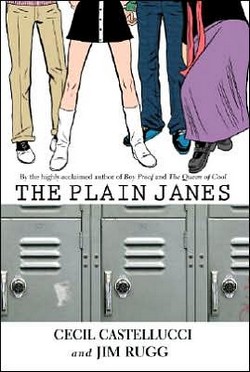
Review: The Plain Janes by Cecil Castellucci and Jim Rugg

The Plain Janes by Cecil Castellucci and Jim Rugg. DC Comics, 2007. Currently available.

Genre: YA Graphic Novel

Face Value: Bold and incredibly cool, this cover is hard to miss. There is a mix of graphic and photographic. We have a bit of disembodied female going on with the legs of the Janes at the top, but in this case I find it tastefully handled. The feet and legs of these girls give us a taste of the vastly different personalities of our four leading ladies – and each is set in a strong stance that broadcasts assertive confidence. I also like the typewriter style font for the title. It adds that nice geeky touch.

Does it break the slate? Definitely. The Janes choose to subvert social expectations to challenge those living in their community. Although Castellucci and Rugg introduce us to four girls slotted into narrow stereotypes (athlete, science geek, drama nerd, and new girl), we get to see each girl grow out of that mold and showcase other interests and abilities.

And it’s not just the story and characters that break the slate, but the book itself. Comics and graphic novels are a historically “boy” genre. When DC Comics launched MINX (an imprint devoted to comics for teen girls) with The Plain Janes, it was a slatebreaking endeavor. Unfortunately, MINX folded in 2008.

Who would we give it to? Girls who don’t have a place to sit in the cafeteria. Reluctant readers who feel that they have limited age-appropriate YA choices. Teens who feel marginalized because of their extracurricular, academic, or personal interests.

Review: When I pick up a graphic novel, I am not only looking for the engaging plot and striking characters that I seek in a typical novel, but I also want a unified aesthetic. The Plain Janes definitely pleases the eye. I love the detailed black and white drawings by Jim Rugg. I also appreciate that the girls in this book are drawn looking like teen girls. They have normal, developing bodies just like real girls do, with a variety of body types are represented. The girls aren’t overly-busty in the way that they are drawn in some other graphic novels.

Jane lives in Metro City and is injured during a bombing. Worried for her safety, Jane’s parents uproot the whole family and land somewhere in suburbia. Jane is so shaken by the attack and the subsequent move that she isn’t quite sure of anything, even herself. She changes her look and her philosophy on life. When she arrives at her new school, she faces the typical new student challenge: finding a place to sit in the cafeteria. Rather than sitting with the popular girls, Jane is attracted to a table of misfits – who also all happen to be named some variation of Jane. Continue reading

Posted in Graphic Novels, Reviews | Tagged , , , , , , | 3 Comments

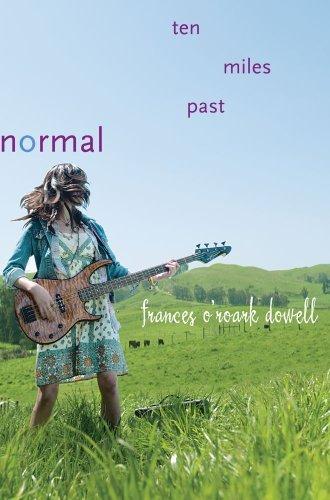
Review: Ten Miles Past Normal by Frances O’Roark Dowell

Ten Miles Past Normal by Frances O’Roark Dowell
Atheneum, 2011 (currently available)

Genre: Contemporary Realism

Face Value: Actually, I love this cover a lot! It looks like the cover designer actually read the book and designed accordingly, and the girl has a head! The farm background is pretty, and the fully pictured girl is totally of the book, right down to the outfit & the bass.

My only complaint is the title. It’s not a bad title, nothing embarrassing or cringeworthy about it. It’s not irrelevant to the book. But I can think of about four million other current middle grade & YA titles that sound basically the same. Off the top of my head: Waiting for Normal by Leslie O’Connor, Define Normal, by Julie Anne Peters, Deliver Us from Normal, by Kate Klise, The Last Exit to Normal, by Michael Harmon, Absolutely Normal Chaos, by Sharon Creech, and a whole host of others. So it doesn’t stand out that much in a list.

Does it Break the Slate? Totally! Janie is thoughtful, creative, compassionate, smart and relatable. I admire her, want to be her friend, and want to give her big sisterly advice. Janie is a Slatebreaker just for her personal journey, not to mention that throughout the story she does the following: rock out as a bass player in a band, become a civic activist, create political art, make awesome friends, reject a stupid boy, kiss an excellent boy, milk goats and learn to quilt.

Who would we give it to? Girls who are looking to move from middle grade up to young adult, fans of The Penderwicks who will become fans of Sarah Dessen, readers interested in any of the following: farms, sewing, playing in a band, civil rights, kissing cute older boys named Monster.

Review: As I mentioned, this book falls right on the cusp of middle grade and young adult (most of the marketing places it in YA markets, but I found it in the middle school section of my public library). It’s nice to find books that fit into this space, for middle school or younger high school readers. High school setting, complete with friends drama and crushes and school bus embarrassment. There’s romance but it carefully walks the line between tame enough for a sixth grader and alluring enough for a tenth grader.

Basically, Janie Gorman is a smart, thoughtful ninth grader who really expected to love high school. But then she starts, and things don’t go according to plan. She doesn’t fit in right away. She hardly ever sees the friends she had throughout elementary and middle school. And the fact that she lives on a farm outside of town results in a whole lot of teasing when she accidentally shows up at school with hay in her hair or boards the bus with goat poop stuck to her ballet flat. So she’s stuck eating lunch in the library, regretting the fact that back in elementary school it was her idea to move out to a farm in the first place. All she wants is to be normal, but it’s hard when your mom’s blog advertises to the world your family’s assorted farming exploits. Things start to get better when she meets an odd but supportive lunchtime friend, starts playing bass in the school’s Jam Band and begins working on a local civil rights project with her long time best friend Sarah and Sarah’s wild older sister Emma.

Continue reading

Posted in Middle Grade, Reviews, Young Adult | Tagged , , , , , , | 1 Comment

Fancy Nancy & the Male Gaze

This post inaugurates a new feature category here at Slatebreakers in which we critically analyze some aspect of kidlit or YA. We’re calling it “Use Your Gray Matter.” This category is named after a line of dialogue from one of our recent favorite books, Bink & Gollie by Kate DiCamillo and Alison McGhee. In the book, Gollie tells Bink to “use her gray matter” when she needs to think things through. We invite you to use your gray matter along with us as we examine characters and series from a feminist perspective.

First, I want share a little background about me that will provide some context for my take on Fancy Nancy. I am not a girly girl. Not once in my life have I ever worn a princess costume. Rather than idolizing princesses, I spent my childhood pretending to be the nasty stepsisters and the wicked witches from fairy tales. I perfected an evil cackle before the age of 5. Thus, when I learned that I would be teaching a week of summer camp based on the Fancy Nancy books by Jane O’Connor, I approached the series with disdain. Continue reading

Posted in Use Your Gray Matter | Tagged , , , , , , , , , | 18 Comments

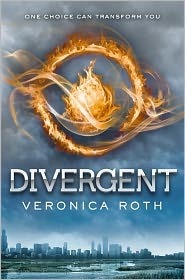
Review: Divergent by Veronica Roth

Divergent, by Veronica Roth
Katherine Tegen Books, 2011 (currently available)

Genre: Dystopian Speculative Fiction

Face Value: This cover suggests to the world that you are reading the Next Big Thing in YA Dystopian Fiction. This is fine, because that is totally what you are doing! The Chicago skyline is a nice touch and the catch phrase and back matter (“ONE CHOICE CAN TRANSFORM YOU”) are compelling, and gives a good sense of who the book is about.

I’ve noticed that dystopias are less likely to have a disembodied girl on the cover than a lot of other YA books with female protagonists, which can only be a good thing. Even though I know it’s because the publishers are trying to make it seem less like a “girl book,” my hatred for that particular aesthetic is enough that I can only see this as a good thing.

Does it Break the Slate? Yes! Our hero, Tris, is a classic dystopian Slatebreaker, demonstrating independence, bravery, intelligence and heroism throughout the book. She challenges expectations of femininity in physical, emotional and intellectual strength. And it gets even better, because Tris is not the typical lone pretty girl playing in a boys’ world, being held up as the one exception to all other females. Both men and women demonstrate the qualities of all five factions, in both positive and negative ways. Christina is a fierce competitor and terrific friend to Tris during the initiation. Natalie, Tris’s mother exhibits a different type of strength, standing by her family and willing to sacrifice everything for it.

Who would we give it to? Fans of The Hunger Games who have been disappointed by some of the other knock off dystopias on the shelves over the past year.

Review: Whoa. I love Chicago, and I miss living there but I would for sure not want to live in this version of Chicago. It’s your basic dystopian situation in which our heroes live in a bleak future where Things Have Gone Wrong. The city has been divided into five factions, based on what they think the reason for the downfall was. If you think that the destruction of society came about because of ignorance, you are an Erudite, who values intelligence. If you blame violence and war, you are one of the Amity, the peaceful. If you blame dishonesty you are a Candor, the honest. If you think it’s the fault of cowardice you are a Dauntless, the brave and if you blame selfishness you are an Abnegation, the selfless. You are born into a family and raised in one faction, but this could change in your sixteenth year, when you decide for yourself which faction you belong with.

Here’s something cool though – the decision. Members of society take an aptitude test at age 16 that dictates which society they belong in. But ultimately it is their choice where they go. This, I’m sure, appeals to the Sorting Hat lovers among us, who have spent a lot of time thinking about where we would align ourselves in these fictitious worlds. It also gives a lot of agency to our characters, who have to decide what they value, despite the consequences. The downside is, of course, that even the nicest of these factions seem a little scary, and Dauntless (which is where we spend most of our time) makes Slytherin look like Hufflepuff.

Continue reading

Posted in Reviews, Young Adult | Tagged , , , , | 5 Comments