
And Then Things Fall Apart, by Arlaina Tibensky
Simon & Schuster, 2011(currently available)
Genre: Contemporary Realistic Fiction
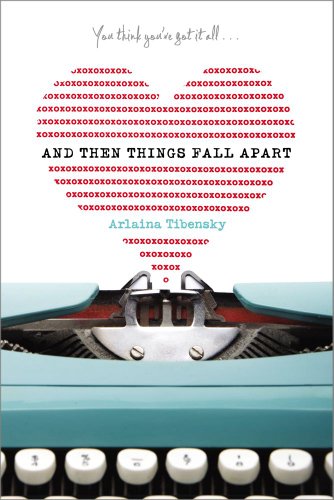 Face Value: This, you guys, is how to do an excellent YA cover. No model-esque girl on the cover, no girl at all in fact. I love the typewriter. I love that it’s actually an incredibly important plot point and it’s on the cover in a way that’s totally aesthetically pleasing. The typeface heart is a little cutesy but I love that too. I was actually a little bit disappointed that I finished this book all at once while sitting on my couch because I wanted to take this cover out in public to be admired.
Does it Break the Slate? OMG YES. Keek is a Slatebreaker from the outset and her emotional journey throughout the course of the book only solidifies her status. This book gets major points for everything from awesome friendships, terrific multigenerational relationships, a huge portion of the plot dedicated to Sylvia Plath and a really honest depiction of a teenager deciding whether or not to lose her virginity. Keek handles everything her life throws at her with as much style as she can muster, considering she has chicken pox at the age of 15.
Who would we give it to? Well I already ordered a copy online and had it shipped to my sister in Boston because she is going to really like it. But in addition to that I’d recommend this book for aspiring writers, poets and artists, and for any teenage girl who’s having sex, thinking about having sex or thinking about thinking about having sex. And anybody who has to figure out that their parents are in fact totally flawed people who sometimes make terrible choices. Also Chicagoans, because who doesn’t like reading a book set in a city you know and love?
Review: Keek (short for Karina) is having a truly terrible summer. She’s dealing with her dad’s infidelity, her parents impending divorce, her mom being halfway across the country, the biggest fight ever with her boyfriend and crushing betrayal from one of her best friends. Plus she has chicken pox. At fifteen. Stuck without internet while recovering at her grandmother’s house, Keek types out her story on an old typewriter and uses readings of Sylvia Plath’s poems and The Bell Jar to cope.
 Brianna
 Sarah
Sarah slatebreakers